SAKU Phases

SAKU is a four-phase methodology (Scan & Speculate, Anchor, Kindle Ideas, Unify & Utilise), a strategic foresight framework that aims to help brands remain relevant in a world of shifting lifestyles, technologies and values by anticipating future disruptions and repositioning themselves through transforming weak signals into future scenarios and actionable strategies. SAKU is delivered as a booklet and a website with applied case studies (Heineken, and others).
If brands do start their strategic foresight journey, as it is a rising though still unrenowned practice, when they do most of them fail because either exploration went on forever, without being turned into a decision, or decisions were made too briskly, without exploring enough.
The SAKU Framework avoids this by drawing its structure from the Double Diamond framework, created by the British Design Council to help organisations navigate complex design and innovation challenges. The D.D. framework has proven remarkably effective across industries and contexts because it explicitly balances exploration with focus, creativity with discipline, possibility with practicality.
As humans, we naturally want to go from problem to solution as quickly as possible, as it is cognitively economical and emotionally satisfying. However, it is actually dangerous to solve the wrong problem or selecting the wrong solution before even understanding what that problem is in the first place. The Double Diamond – and by extension, the SAKU Framework – prevents this through a systematic, rhythmic succession of divergence and convergence stages, ensuring one fully understands their own challenges, deeply, before looking into solutions.


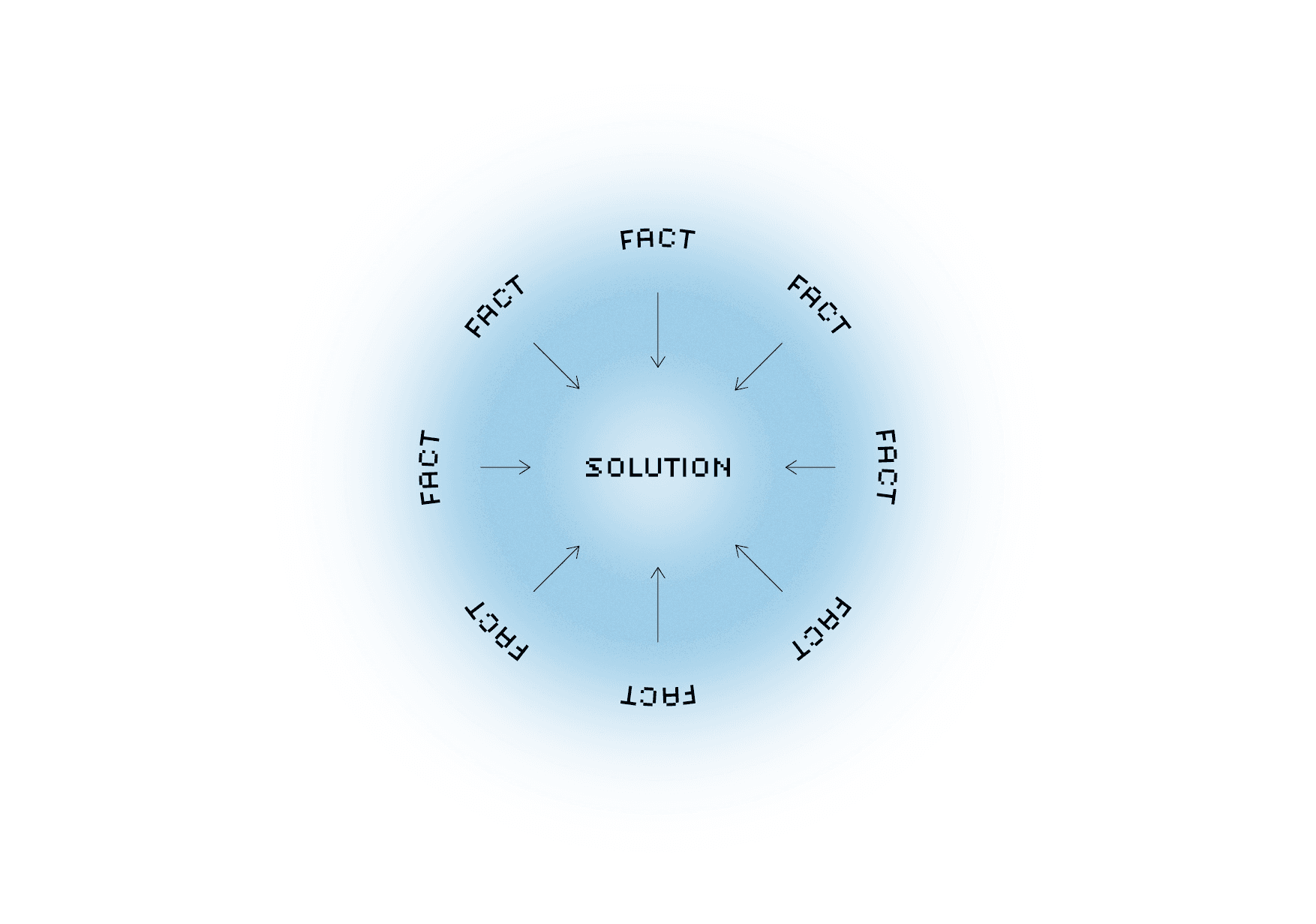

DIVERGENT VS. CONVERGENT THINKING
The Double Diamond’s power comes from explicitly alternating between two fundamentally different modes of thinking, each essential but alone insufficient for complex challenges, especially strategic ones.
> Divergent thinking generates multiple ideas and possibilities. Here, prejudice and preconceptions are ignored to ask ‘what if’ questions, to stretch one’s own imagination and challenge assumptions, seeking variety, novelty, and breadth. Ambiguity and contradiction are key to create scenarios and identifying possibilities, without working out the statistics. Divergent thinking prevents settling on familiar solutions, allowing for brands to build a spectrum of ideas that enables creative response to unexpected developments.
> Convergent thinking evaluates and synthesises the ideas generated during the divergent thinking. Here, choices and commitments are made, seeking quality and feasibility, asking ‘so what’ questions that transform observations into consequences and implications. Ultimately, convergent thinking transforms scattered observations and multiple possibilities into coherent ideas and practical actions.
The Double Diamond systematically alternates between expanding and contracting, exploring and focusing, generating and selecting, ensuring comprehensive exploration without paralysis, and decisive action without premature commitment.
THE RHYTHM OF STRATEGIC THINKING
Let’s imagine we’re standing at a crossroads in a place we don’t know, no phone.
We could immediately pick a direction and start walking – decisive action –, but we would be choosing based on limited information, potentially heading in exactly the wrong direction. Alternatively, we could explore every possible path before deciding – comprehensive analysis.
Nonetheless, we’ll exhaust resources exploring options that clearly won’t work whilst people around us know their destination exactly and will bump into us, still undecisive, and start swearing from the corner of their mouth.
The Double Diamond offers a compromise between decisive action and comprehensive analysis by alternating expansion and contraction thinking, Thus, the D.D. Framework is divided in four phases:
DISCOVER (Divergent): Research phase
DEFINE (Convergent): Synthesis phase
DEVELOP (Divergent): Ideation phase
DELIVER (Convergent): Implementation phase
This rhythm can be visually translated into two diamonds.
The first diamond explores what designers call the problem space. For strategic foresight, this means understanding the brand’s current strategic position and the full complexity of environmental forces, drivers, and trends that might affect its future. Finally, the brand will synthesise this complexity into precise and focused possibilities-scenarios to clarify what changes matter most to the business.
The second diamond explores the solution space. After obtaining clarity about the challenges and uncertainties the brand faces and which ones matter above others, this part will now expand strategic imagination to consider multiple responses across different scenarios, preparing for unexpected developments. Eventually, the brand will land on concrete strategies, integral plans, and systematic implementation that turn insights – or, rather, foresights – into action.
FROM DOUBLE DIAMOND TO SAKU FRAMEWORK
The Double Diamond provides the structural foundation, but strategic foresight requires specific steps to address brand strategy challenges under uncertainty.
The SAKU Framework is thus an adaptation of the Double Diamond, specificaly designed for the strategic brand foresight realm, maintaining the core rhythmand lateral thinking method, whilst introducing relevant contents and methods.
SAKU, from the Japanese 策, meaning ‘plan’ or ‘strategic scheme’, consists of four phases:
SCAN & SPECULATE (Divergent Exploration) corresponds to the Discover phase, referring to brand analysis, environmental scanning, signal detection, and pattern recognition relevant to the brand of study.
ANCHOR (Convergent Synthesis) corresponds to the Define phase, where the brand identifies critical uncertainties and constructs multiple scenarios in which the brand could find itself in.
KINDLE IDEAS (Divergent Innovation) corresponds to the Develop phase, letting brands generate diverse strategic options that could succeed across multiple scenarios whilst preparing for discontinuous change.
UNIFY & UTILISE (Convergent Implementation) corresponds to the Deliver phase, focusing on integrating foresight into strategic, actionable plans, restructuring organisational capabilities, establishing adaptive implementation systems, and educating the right resources.
Each phase serves a distinct purpose in the strategic foresight process whilst building on previous phases and enabling subsequent ones.
Overview

The goal here is comprehensive awareness, not immediate action. Where does the brand currently stand? What forces might affect its future? What signals suggest emerging changes? What assumptions do we need to challenge?
This phase asks:
> Where are we at in the world?
> How is the world changing?
This phase requires looking simultaneously inward at the brand’s current reality and outward at environmental forces that might reshape its context. Here, brands develop what military strategists have called ‘situational awareness’ since Oswald Boelcke’s WWI flying tactics, a concept later formalized by Dr. Mica Endsley into three ascending levels:
• Perception of key elements in the environment;
• Comprehension of their meaning and relevance;
• Projection of their status into the near future.
Now, many signals will prove irrelevant and many patterns will matter less than initially thought, but this comprehensive exploration it’s crucial to prevent strategic blind spots, to expose unexpected possibilities, to challenge comfortable assumptions, and to build the environmental intelligence that enables strategic adaptation. Nothing should be discarded or diminined.

The goal here is clarity: synthesising previous gathered information typically produces a small number of distinct scenarios that capture different combinations of critical uncertainties; the scenarios become reference points for subsequent strategic thinking and guiding focused exploration of meaningful different futures.
This phase asks:
> Which changes among others matter to us the most?
Previous comprehensive awareness generates complexity as it picks up any noise, from drivers, to trends, to signals, to environmental forces. Complexity creates strategic confusion unless systematically synthesised into clear priorities, distinguishing strategic priorities from strategic distractions. The convergent nature of this phase means making hard choices. Here, maintaining rigorous criteria is needed whilst acknowledging that perfect information will never exist. Not all trends deserve equal attention, not all uncertainties deserve deep exploration.

The goal here is strategic flexibility, prepardeness and adaptation. With now clear scenarios established, imagination can expand once again, focusing on generating strategic responses rather than understanding other challenges. How might the brand succeed across these different futures? What strategic options create value regardless of which scenario emerges? How can we prepare for unexpected developments that no scenario anticipated?
This phase asks:
> How can and should we change with the world that’s coming?
The divergent nature of this phase means generating multiple possibilities rather than converging prematurely on single solutions. The brand will need to develop robust strategies that strengthen the brand across all scenarios, while providing flexibility as uncertainty evolves, and bold bets that could create breakthrough advantage if specific futures emerge. Alongside these, the brand will build early warning systems for developments no scenario anticipated like wild cards and discontinuities.
Here, creative strategic thinking needs to balance imagination with practicality. Pure creativity generates interesting but impractical ideas; pure analysis produces safe but uninspiring strategies. Disciplined creativity guided by scenario insights, produces options that are both imaginative and actionable.

The goal here is transformation, moving from possibility to reality, obtaining actionable roadmapsand improvement mechanisms to ensure that the organisation doesn’t just plan for change but thrives on it. Strategic options remain intellectual exercises until translated into concrete, organisational commitments and actions. This final convergent phase transforms insights into implementation, and analysis into advantage.
This phase asks:
> What will we actually do?
> How do we act?
Unlike earlier convergent phases focused on theory, this stage translates foresight into action. Here, the brand commits to concrete resource allocation, strategic priorities, and organisational change, turning into strategy, and establishing systems for monitoring and learning. As the future won’t unfold as scenarios predicted, strategies should adapt as change arises, monitoring should bring to responsive recalibration, and learning should continuously evolve the brand’s strategic thinking.
The SAKU Phases

‘The most reliable way to forecast the future is to try to understand the present’ (John Naisbitt, futurist and author of Megatrends, 1982).
INTRO
The SCAN & SPECULATE phase is about expanding awareness and challenging assumptions, understanding all the forces that might affect the brand’s future. The team in charge of the strategic foresight project needs to let go of prejudice and preconceptions, and explore every aspect of the brand and its surroundings, as the goal is pure comprehensive observation free of judgement.
Therefore, we’ll move from an initial internal analysis to an external one, introducing the concepts of used futures, brand equity, and more.
To scan the brand and its surroundings and speculate on facts and insights, the brand should already have its identity elements defined, including the brand vision. If this isn’t the case, here’s a brief guide to do it.
‘A brand vision is an aspirational statement that represents where the brand aims to be in the future, typically within the next 5-20 years. It’s a projected destination that encapsulates the brand’s long-term ambitions and desired impact on the world. A brand vision should be grounded in the brand’s purpose – the core reason for the organisation’s existence beyond making a profit’ (The Branding Journal).
It is a compelling picture of the brand’s desired evolution that guides strategic decisions and inspires stakeholder commitment. It is grounded in the brand’s fundamental beliefs, values and promise.
• Where does the brand want to be in 10-20 years?
• What impact does it want to have on customers, community, industry?
• What would make the brand proud of its own legacy?
• How does the brand want stakeholders to describe itself?
• What fundamental beliefs guide the brand decisions regardless of changing circumstances?
• Why does the brand exist beyond making money?
• What positive change does it want to create in the world?
• How do the brand’s values align with the brand aspirations?
The brand vision is different from the brand mission.
‘A brand’s mission is the “master plan” to achieve the brand’s vision. It describes how a brand aims to conduct daily operations and make decisions to serve its purpose and achieve its vision. It’s a more practical and actionable plan that guides your brand’s day-to-day operations and decision-making’ (The Branding Journal).
Here are some examples of brand visions and brand missions in comparison:
> Too Good to Go
• Brand vision: ‘A planet with no food waste’.
• Brand mission: ‘Our mission is to inspire and empower everyone to take action against food waste together to achieve our vision of a planet with no food waste’.
> Tony’s Chocolonely
• Brand vision: ‘Together we make 100% slave free the norm in chocolate. Not just our chocolate, but all chocolate worldwide’.
• Brand mission: ‘To help us get there we have created a roadmap that outlines our long-term goals. Every year we take (small and large) steps that move us towards these goals. Our roadmap consists of three pillars of action:
1. Tony’s creates awareness
2. Tony’s leads by example
3. Tony’s inspires to act’
The vision development process often reveals tensions between current reality and future aspiration, but these can be solved by the outcome of the strategic foresight project, translated into strategies and brand mission.
STEP 1: CURRENT BRAND ANALYSIS
The objective here is to establish the brand’s present reality and future aspirations as the foundation for foresight work.
One cannot start walking toward a destination without knowing where they are starting from. This foundational step creates the baseline against which the brand will evaluate all future scenarios: in this phase, what needs to be defined is what is the brand, why it exists, what forces have shaped it, what is the brand currently doing good and what elements of the current strategy might be holding the brand back from future success.
One must first identify what futurist Sohail Inayatullah calls ‘used futures’, namely elements of the brand strategy that no longer work but that continue to be employed out of habit or institutional inertia. These represent strategic dead weight that prevents adaptation and evolution.
Used futures could be one of the following:
• Marketing messages that used to powerfully resonate with current audiences but no longer do;
• Value propositions based on outdated customer needs, which evolution hasn’t been studied by the organisation;
• Brand positioning that reflects past rather than present competitive landscapes and no longer holds strategic advantage;
• Communication channels that have lost effectiveness but remain in use because ‘that’s how we’ve always done it’;
Internal processes that constrain rather than enable brand evolution, again, because of lack of change and update.
Identifying used futures requires honest self-reflection and the courage to question pillars that have held the organisations for a long period of time.
Let’s pretend my grandmother opened a small bakery in 1975. For fifty years there would have been the same opening hours, the same product range, and the same way of engaging with customers – someone might call this the brand personality. These weren’t necessarily wrong strategies as they were successful for decades, but changing lifestyles, evolving technology and environmental change transformed them from assets into limitations.
To identify a brand’s used futures, some assessment questions should be used:
• What brand elements does the business maintain simply because ‘that’s how we’ve always done it’?
• Which brand promises feel increasingly difficult to deliver authentically?
• What aspects of the brand identity feel dated when compared to emerging competitors?
• Which brand touchpoints consistently underperform but remain unchanged?
With used futures identified, one can conduct a thorough assessment of the brand’s current state using established brand equity frameworks that provide systematic insight into brand health and potential.
‘Brand equity is the value premium that a company generates from a product with a recognizable name, when compared to a generic equivalent’ (Investopedia).
David Aaker’s Brand Equity Model offers five essential dimensions for undergoing brand assessment.
Brand loyalty reveals itself through:
• Customer retention rates and repeat purchase behaviour
• Price sensitivity and willingness to pay premiums
• Advocacy levels and word-of-mouth generation
• Switching costs and competitive vulnerability
Strong loyalty is not just about satisfaction but about customers choosing the brand even, or even advocating for the brand, when alternatives might offer better functional benefits. A strong customer loyalty means the customer trusts the brand.
Assessment Questions:
• ‘How loyal are our customers compared to industry benchmarks?’
• ‘What would cause our most loyal customers to switch to competitors?’
• ‘How do loyalty patterns vary across different customer segments?’Brand awareness operates on multiple levels:
• Unaided and aided brand recognition by customer
• Top-of-mind positioning within category or niche
• Brand recall when prompted or naturally in purchase situations
• Share of voice versus share of mind
Awareness is about being known, being remembered at the right moment and in the right context.
Assessment Questions:
• ‘When customers think of our category, do they think of our brand?’
• ‘How quickly can customers recall our brand when prompted?’
• ‘In which contexts is our brand awareness strongest or weakest?’Perceived quality extends beyond actual product or service performance:
• Customer quality perceptions relative to competitors
• Reliability and performance expectations
• Service quality and customer experience ratings
• Premium positioning credibility
Quality perception affects how customers interpret every interaction with the brand, exceeding or fall short of actual performance. Understanding these gaps reveals opportunities for strategic action.
• Assessment Questions:
• ‘How do customers rate our quality versus alternatives?’
• ‘What drives quality perceptions in our category?’
• ‘Where do quality perceptions exceed or fall short of actual performance?’Brand associations represent the mental connections customers make with the brand:
• Functional benefits and rational associations
• Emotional benefits and experiences
• Self-expressive benefits and identity linkages
• Unique points of difference and competitive distinctiveness
These associations differentiate the brand from competitors and create the foundation for customer preference. The strength and relevance of these associations determine the brand’s resilience and growth potential.
Assessment Questions:
• ‘What comes to mind when customers think of our brand?’
• ‘Which associations differentiate us from competitors?’
• ‘How do current associations align with our strategic aspirations?’Proprietary assets include:
• Intellectual property and legal protections
• Distribution relationships and channel access
• Technology capabilities and innovation assets
• Regulatory advantages and market position
These assets create barriers to competition and platforms for growth, but only if they translate into customer value and competitive advantage.
Assessment Questions:
• ‘What unique assets would be difficult for competitors to replicate?’
• ‘How do our proprietary assets translate into customer value?’
• ‘Which assets provide sustainable competitive advantages?

Kevin Keller’s Customer-Based Brand Equity (CBBE) pyramid provides a complementary perspective, examining the customer journey from awareness to advocacy, thus to deep psychological connection.
Level 1: Brand identity (customer wonders: ‘Who are you?’)
• Brand salience and identification
• Breadth and depth of brand awareness
• Ease of brand recall and recognition
Level 2: Brand meaning (customer wonders: ‘What are you? Why are you?’)
• Functional performance: benefits and reliability
• Emotional imagery: benefits and brand personality
Level 3: Brand response (customer wonders: ‘What about you?’)
• Rational judgements, quality perceptions and credibility
• Feelings, emotional responses and engagement
Level 4: Brand relationships (customer wonders: ‘What about you & me?’)
• Active loyalty: repeat purchase and advocacy
• Genuine brand resonance: deep psychological connection
These models reveal where the brand stands today, how it got here and what might influence its future trajectory, showing what strengths to build upon and vulnerabilities to address.
Most importantly, they provide a common language for strategic discussions and a baseline against which to measure the impact of strategic changes.
Brand equity frameworks provide conceptual clarity about brand health dimensions. However, understanding brand equity in theory differs from measuring it in practice.
Following, we will translate these frameworks into concrete assessment and data on how the brand is actually performing, how customers truly perceive it, and where gaps between aspiration and reality exist.
The brand health assessment examines four dimensions which, together, create a broad view of the business current state and enables meaningful scenario planning.
Performance metrics
• Market share and competitive position
• Customer satisfaction and loyalty scores
• Brand awareness and consideration levels
• Financial performance (revenue, profit margins, growth rates)Digital presence and engagement metricsPerception analysis
• Customer interviews or surveys to understand current brand perceptions
Online reviews and social media mentions
• Comparison of the brand positioning against competitors
• Identification of gaps between intended and actual brand imageCapability assessment
• Core competencies and unique strengths
• Operational capabilities and limitations
• Financial resources and constraints
• Human capital and organisational culture
• Technology infrastructure and digital capabilitiesStakeholder Ecosystem Mapping & Relationship quality assessment
Creating a visual map of all entities that affect or are affected by the brand:
• Primary Stakeholders
• Customers (current and potential)
• Employees and management
• Suppliers and vendors
• Investors or owners
• Distribution partners
• Secondary Stakeholders
• Local community
• Industry associations
• Regulatory bodies
• Media and influencers
• Competitors
For each stakeholder group, evaluating:
• Current relationship strength (1-5 scoring)
• Importance to brand success (1-5 scoring)
• Satisfaction with current brand performance
• Future expectations and requirements

STEP 1.2 BRAND STATEMENTS & STRATEGIC ALIGNMENT
Beyond measuring brand equity, strategic foresight requires understanding the brand's stated intentions and whether current actions align with proclaimed values and ambitions. This analysis surfaces gaps between aspiration and reality that might widen or narrow in different future scenarios.
> Brand Statements Analysis
• Examining the brand's formal declarations and possible gaps with reality:
• Taglines and slogans (current and recent): what promises do they make? How have they evolved?
• Vision statement: where does the brand claim to be heading?
• Mission statement: how does the brand claim to operate?
• Values: what principles supposedly guide decisions?
These statements reveal what the brand wants stakeholders to believe.
> Initiatives & Events Alignment
Testing whether brand behaviour matches brand statements:
• Which initiatives and campaigns demonstrate values in action?
• Who does the brand partner with? What causes does it support?
• What events does it sponsor or host?
• Do these choices reinforce or contradict stated vision and values?
Misalignments might reveal emerging strategic direction not yet formalised, or expose inauthentic positioning vulnerable to stakeholder scepticism.
> Brand Data Sheet Development
Creating a comprehensive factual foundation documenting:
• Origins: when the brand was established, by whom, founding purpose
• Financial trajectory: revenue history, record years and explanations, current revenue streams by product/geography/segment
• Geographic presence: markets served, production locations, distribution networks
• Growth patterns: which divisions/products/regions are growing/declining and why?
• Business model: how value is created, captured, and delivered
• Marketing focus: where resources concentrate (demographics, channels, messages)
This data sheet becomes the reference point for understanding what might need to change as futures unfold differently.
> Strategic Questions & Hypotheses Generation
With brand statements and data assembled, now we generate provocative questions that challenge comfortable assumptions:
• If stated values were taken literally, what would change?
• If current growth patterns continue, where does the brand get to?
• What emerging trends contradict current strategic direction?
• What adjacencies might the brand explore based on capabilities rather than category?
In general, documenting these questions is fundamental as they become the seeds of scenario thinking in the ANCHOR phase.
STEP 2: ENVIRONMENTAL SCANNING & MARKET ANALYSIS
With a clear understanding of its current reality, the brand can now move onto understanding its surroundings. Successful strategic foresight requires developing ‘peripheral vision’, the ability to spot changes before they become obvious to everyone. This means systematically scanning the external environment for forces that might affect the brand’s future.
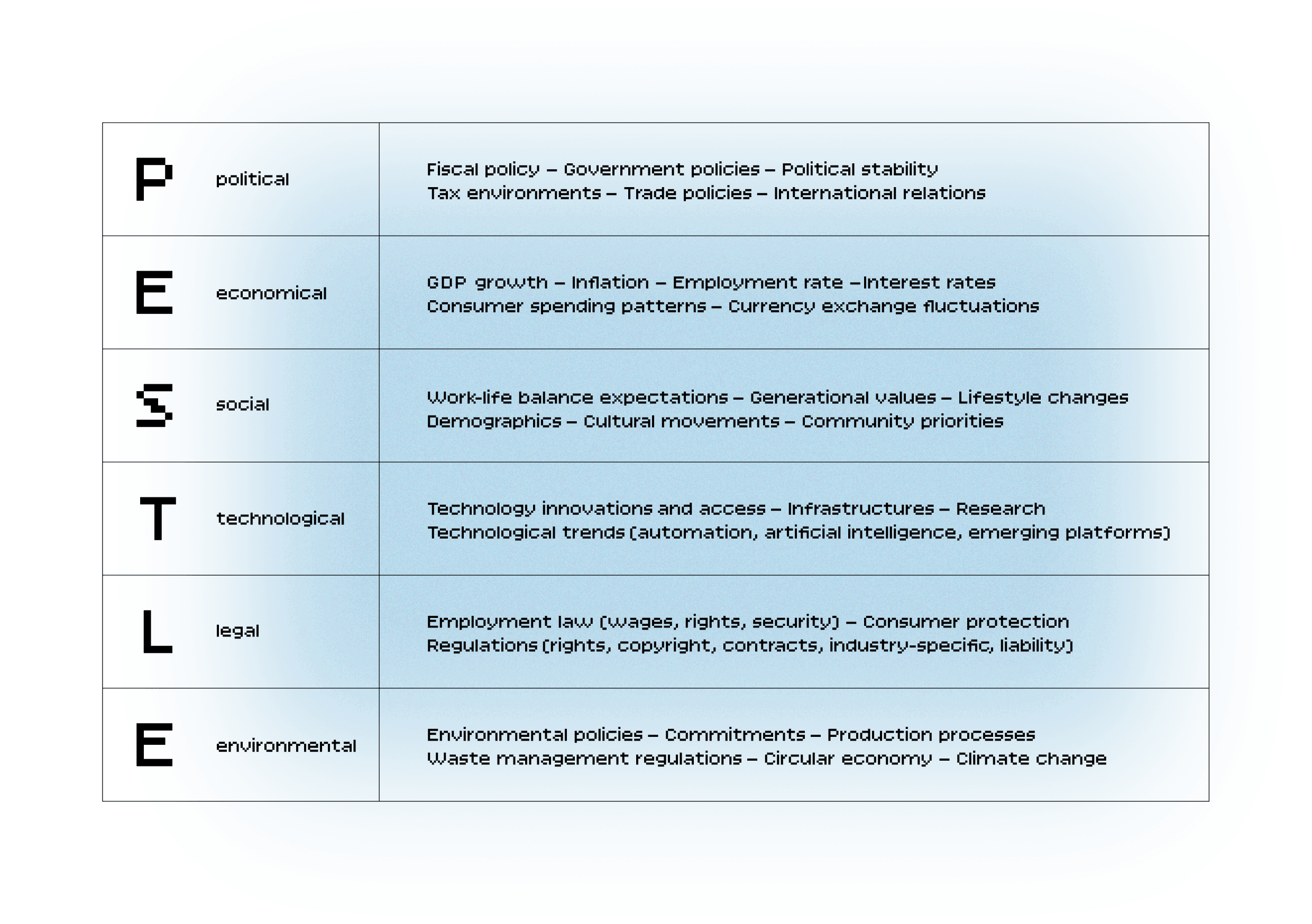
Environmental scanning requires consuming the right information in a structured way so that it reveals patterns and implications others might miss.
The PESTLE framework provides this structure. Applying it effectively requires understanding what to look for and how seemingly distant developments might eventually affect the brand.
> Political Factors
Fiscal and government policies, political stability, tax environments, trade policies, international relations
To consider for the brand:
• Upcoming elections and potential policy changes
• New regulations affecting the industry
• Tax policy changes that might affect customers
• Trade policies and international relations
• Government spending priorities
• Public sector modernisation initiatives
Example questions:
• How might changes in data privacy laws affect our customer relationships?
• Could new environmental regulations change operational requirements?
• Are there political movements that align with or oppose our brand values?
> Economic Factors
GDP growth, inflation, employment and interest rates, consumer spending patterns, currency exchange fluctuations
To consider for the brand:
• Economic growth forecasts for the market regions
• Changes in consumer income and spending power
• Interest rate trends affecting business investment
• Currency fluctuations (if the business operates internationally)
• Labour market conditions and wage pressures
• Economic inequality trends
Example questions:
• How might inflation affect our cost structure and pricing?
• Could economic uncertainty change customer spending priorities?
• Are there emerging markets where our brand could expand?
> Social Factors
Work-life balance expectations, generational values, lifestyle changes, demographics, cultural movements, community priorities
To consider for the brand:
• Generational differences in values and behaviours
• Cultural movements and social causes gaining momentum
• Changes in family structures and living arrangements
• Health and wellness trends
• Education and skill development patterns
• Social media and communication preferences
Example questions:
• How are younger consumers’ values different from older generations?
• What social causes do our customers care about?
• How are work-life balance expectations changing?
> Technological Factors
Innovations and access, infrustuctures, R&D trends (automation, artificial intelligence, emerging platforms)
To consider for the brand:
• Emerging technologies that could disrupt the industry
• Automation possibilities for the business operations
• Digital transformation trends in customer behaviour
• New communication and marketing technologies
• Data analytics and artificial intelligence applications
• Cybersecurity and privacy considerations
Example questions:
• Could artificial intelligence automate parts of our service delivery?
• How might virtual or augmented reality affect customer experiences?
• What new platforms might emerge for customer engagement?
> Legal Factors
Employment law (wages, rights, security), consumer protection, regulations (rights, copyright, contracts, industry-specific, liability, antitrust)
To consider for the brand:
• New consumer protection regulations
• Employment law changes affecting workforce managementIntellectual property law evolution
• Industry-specific legal requirementsInternational legal considerations
• Liability and insurance requirements
Example questions:
• Are there pending legal changes that could affect our operations? How might liability standards evolve in our industry?
• Could new intellectual property rules affect our competitive position?
> Environmental Factors
Environmental policies, commitments, production processes, waste management regulations, circular economy, climate change
To consider for the brand:
• Climate change impacts on business operations and customers
• Sustainability expectations from stakeholders
• Resource availability and cost trends
• Environmental regulations and standards
• Circular economy and waste reduction trends
• Renewable energy adoption
Example questions:
• How might climate change affect our supply chain?
• What sustainability standards might become mandatory?
• Could resource scarcity affect our cost structure?
In general, each dimension should answer the following questions:
• What forces exist in this dimension currently?
• What changes are already underway?
• What emerging developments might affect the brand?
• What decisions or developments might the brand influence?
• What’s completely outside the brand’s control?
At the end of this part, one should have a comprehensive PESTLE analysis withan industry evolution assessment and a first order of future implications. These factors will lay the base for signals detenction, pattern recognition and trend clustering.
PESTLE analysis can be complimented or substituted by other environmental scanning tools such as STEEP, tools to conduct market research for a brand.
STEP 2.2 MARKET MATURITY & CATEGORY POSITION ANALYSIS
Strategic implications of environmental forces vary dramatically depending on where the brand operates within market lifecycle, as a force creating opportunity in emerging markets might threaten positions in saturated ones.
Evaluating which lifecycle stage(s) characterise the brand's primary markets:

Emerging Markets (high growth, low competition)
• Characteristics: new category formation, customer education required, rapid growth, unclear standards, experimental business models
• Strategic implications: first-mover advantages available, land grab mentality, high uncertainty about winning approach
Foresight focus: which signals suggest market viability? What might accelerate or stall growth?Growing Markets (accelerating growth, increasing competition)
• Characteristics: mainstream adoption beginning, multiple competitors entering, consolidation starting, standards emerging
• Strategic implications: scale becoming important, differentiation critical, profitable growth possible
Foresight focus: how long can growth sustain? What forces might shift to maturity or collapse?Mature Markets (slowing growth, established competition)
• Characteristics: market saturated, competition intense, innovation incremental, efficiency emphasis
• Strategic implications: market share battles, margin pressure, consolidation pressures
Foresight focus: what disruptions might destabilise? What adjacent growth opportunities exist?Declining Markets (negative growth, consolidating competition)
• Characteristics: structural demand decline, competitors exiting, cost focus, harvest strategies
• Strategic implications: manage decline or exit, extract remaining value, avoid overinvestment
Foresight focus: how steep is decline? What successor categories emerge?
Many brands operate across multiple markets simultaneously, creating complex strategic contexts:
• Traditional core markets (often mature or declining)
• Adjacent growth markets (emerging or growing)
• Experimental new markets (emerging with high uncertainty)
For each market the brand participates in, one should assess:
• Current maturity stage and likely trajectory
• Brand position (leader, challenger, niche, new entrant)
• Strategic role (profit generator, growth driver, future option)
• Resource allocation (investment level, time horizon, risk tolerance)
Environmental forces create implications depending on market maturity:
• Regulatory changes might protect mature market positions or enable new market entry
• Technological disruptions might threaten mature markets whilst creating emergent ones
• Social value shifts might accelerate decline in one market whilst spurring growth in another
• Economic changes might pressure mature market margins whilst funding new market experiments
One should document how the same PESTLE forces create different strategic implications across the brand’s market portfolio, to prevent simplistic environmental analysis and reveal where the brand should double down versus diversify.
STEP 2.3 ENVIRONMENTAL ASSUMPTIONS TO CHALLENGE
Environmental scanning reveals external forces, but equally important is questioning the mental models that shape how the organisation interprets its environment, assumptions, often invisible and unexamined, that constrain strategic imagination.
Every brand operates on foundational beliefs about its industry, customers, and capabilities. Strategic foresight requires making these explicit so they can be tested:
• Category assumptions:
- ‘We are a X company’ (beer company, toy company, fashion company)
- ‘Our customers want Y’ (cheap prices, premium quality, convenience)
- ‘Success in our industry requires Z’ (scale, innovation speed, heritage)
• Competitive assumptions:
- ‘Our advantages come from X’ (distribution, recognition, cost structure)
- ‘Competitors will Y’ (remain traditional, consolidate, innovate slowly)
- Market boundaries are Z’ (stable, expanding, contracting)
• Value assumptions:
- ‘Premium means X’ (expensive, exclusive, luxury)
- ‘Customers value Y most’ (price, quality, experience, values-alignment)
- ‘Our brand stands for Z’ (which might differ from what customers believe)
For each core assumption, we need to document:
• The assumption stated explicitly
• Evidence supporting it (where does this belief come from?)
• Contradictory signals (what might suggest it’s changing or false?)
• Scenario implications (What if this assumption becomes invalid?)
This process shows strategic blind spots, meaning areas where the organisation’s worldview prevents recognition of important changes. Challenging assumptions doesn’t mean abandoning them, but rather testing their continued validity across plausible futures.
Example assumption challenges:
• If ‘we are a beer company’, what happens when beer consumption declines structurally?
• If ‘premium means expensive’, how do we respond when personalisation and purpose drive premium perceptions?
• If ‘our customers value X’, what strategic options open if their values shift toward Y?
These challenged assumptions become critical uncertainties in the next phase, shaping which scenarios deserve deep exploration. At the same time, it opens doors to possibilities that were had not been considered before, perhaps bringin the business to a pioneer position in the industry, or even allowing the organisation to create a new category or market entirely.
STEP 3: SIGNALS & WEAK SIGNALS DETECTION
By the time every organisation sees a trend, it’s too late to gain competitive advantage. This step teaches to spot changes whilst they’re still emerging, providing time to adapt or capitalise. Signal detection is more art than science, requiring both systematic method and intuitive sensitivity to anomalies and possibilities as well as lateral thinking to connect seemingly unrelated insights.
The relationship between signals, trends, and established patterns forms a hierarchy of visibility and strategic value.
> Signals are early indicators that trends might be emerging or changing:
• A small group of consumers starts buying refurbished products instead of new ones
• Local government pilot programmes test new regulatory approaches
• Academic researchers publish studies on emerging consumer behaviours
• Start-ups develop solutions for problems that don’t seem widespread yet
> Weak Signals are even earlier indicators that most people dismiss or don’t notice:
• Unusual patent filings
• Fringe community behaviours
• Unexpected policy proposals
• Anomalous market data
• Edge case customer requests
> Trends are already visible patterns that most people recognise:
• ‘Online shopping is growing’
• ‘Consumers care more about sustainability’
• ‘Remote work is becoming common’
The strategic value of signals increases as their visibility decreases. Weak signals offer the greatest competitive advantage precisely because they’re easy to dismiss or ignore, as they require interpretation and judgement: they might be meaningless noise or they might be the first indication of transformational change. Learning to distinguish between them is what separates strategic foresight from strategic guessing.
A way to detect signals is to expand the brand’s information universe beyond comfortable, familiar sources.
• Fringe communities and subcultures often adopt new behaviours and values before they become mainstream:
- Online communities focused on specific interests or challenges
- Early adopters of new technologies
- Activist groups championing specific causes
- Niche hobby or lifestyle communities
- Professional networks in adjacent industries
• Academic and research institutions often identify patterns before they become commercially visible:
- University research papers and studies
- Think tank reports and policy papers
- Research conference presentations
- Grant funding patterns
- Graduate student thesis topics
• Start-up ecosystems and entrepreneurs often build solutions for emerging problems:
- New company formations in the brand space
- Venture capital investment patterns
- Accelerator programme cohorts
- Crowdfunding campaign themes
- Patent applications and intellectual property filings
• Regulatory and policy environments, or government actions in general, often signal future requirements:
- Proposed legislation and regulations
- Pilot programmes and policy experiments
- International agreements and standards
- Regulatory agency reports and studies
- Public consultation processes

Another way to identify signals and weak signals, as well as to monitor change is to use the CIPHER framework, so to find patterns among information gathered through the PESTLE analysis, but the framework can be the first tool to be used for horizon or environmental scanning.
As previously said, detecting signal does not only mean accessing numerous resources, but also having the ability to recognise what is noise from what is actually important.
This means developing sensitivity to anomalies, contradictions, and possibilities that others might overlook, and it requires both systematic methods and intuitive awareness.

Systematic methods include the ASCENDS model, which evaluates signals detected through the CIPHER framework and their implications, as well as the 5W+H method, which provides systematic structure for signal evaluation.
In this case, for each potential signal, one should ask:
• Who is involved? (groups, demographics, organisations)
• What exactly is happening? (specific behaviours, events, developments)
• When did this start? (timeline and pace of development)
• Where is this occurring? (geographic, cultural, industry contexts)
• Why is this happening? (underlying motivations and drivers)
• How is this manifesting? (specific mechanisms and processes)
To conduct anomaly detection one must focuse attention on things that don’t fit normal patterns:
• Unexpected customer requests or complaints
• Unusual sales patterns or market behaviour
• Surprising research results or findings
• Counterintuitive social or cultural developments
• Technology applications in unexpected contexts
The process of systematic signal detection should be conducted regularly as scanning routine. The organisation should also have a growing database of captured signals with consistent evaluation criteria.
The brand signal capture system should document each signal’s source, category, description, relevance, confidence level, connections to other signals, and required follow-up actions. This systematisation enables trend recognition across time and creates organisational memory that prevents important signals from being forgotten.
At the end of this phase, one should have gathered initial patterns and themes emerging from signal analysis.
STEP 4: PATTERN RECOGNITION & TREND CLUSTERING
Individual scattered signals can be misleading or irrelevant. The real strategic insights come from understanding how multiple signals connect to create largermeaningful patterns of change and coherent trend narratives.
Signals can be thought as individual data points while patterns as the lines connecting them. A signal might be ‘one start-up developing AI-powered nutrition advice’, while a pattern emerges when one notices ‘multiple start-ups working on personalised health solutions’ and ‘increasing consumer interest in preventive healthcare’ as well as ‘new wearable devices tracking health metrics’ and ‘insurance companies offering wellness incentives’.
The pattern suggests a broader shift toward personalised, preventive health management that could affect multiple industries.
Pattern recognition requires systematic signal clustering combined with creative connection-making.
> Step 1: Signal Clustering
Grouping related signals into thematic categories:
• Looking for signals addressing similar problems
• Identifying signals using similar technologies or approaches
• Finding signals affecting the same customer groups
• Noticing signals emerging from the same geographical regions or cultural contexts
> Step 2: Connection Mapping
Drawing relationships between different signal clusters:
• Which signals might reinforce each other?
• Which signals might conflict or compete?
• Which signals might be cause-and-effect related?
• Which signals might converge or intersect?
> Step 3: Driver Identification
Looking for underlying forces creating the patterns:
• What fundamental needs or problems are driving these signals?
• What enabling technologies or capabilities make these signals possible?
• What economic, social, or political changes are motivating and influencing these developments?
• What constraints or barriers are being overcome?
To understand the dynamic of the trend clustering and pattern recognition system, some tools can be used.
Among these:
• Cross-Impact Analysis helps understand how different trends and patterns might influence each other.

• Futures Wheel allows for a mapping of order of effects and consequences which can lead to specific scenarios.

• Wardley Mapping is useful to understand value chain evolution.
• Impact/Uncertainty Matrix offers a way for signals to be organised in key trends, critical uncertainties, and trends to monitor.

• The Futures Triangle allows for signals to be combined with other two forces shaping the brand’s evolution: the brand’s vision and the weight of the past.
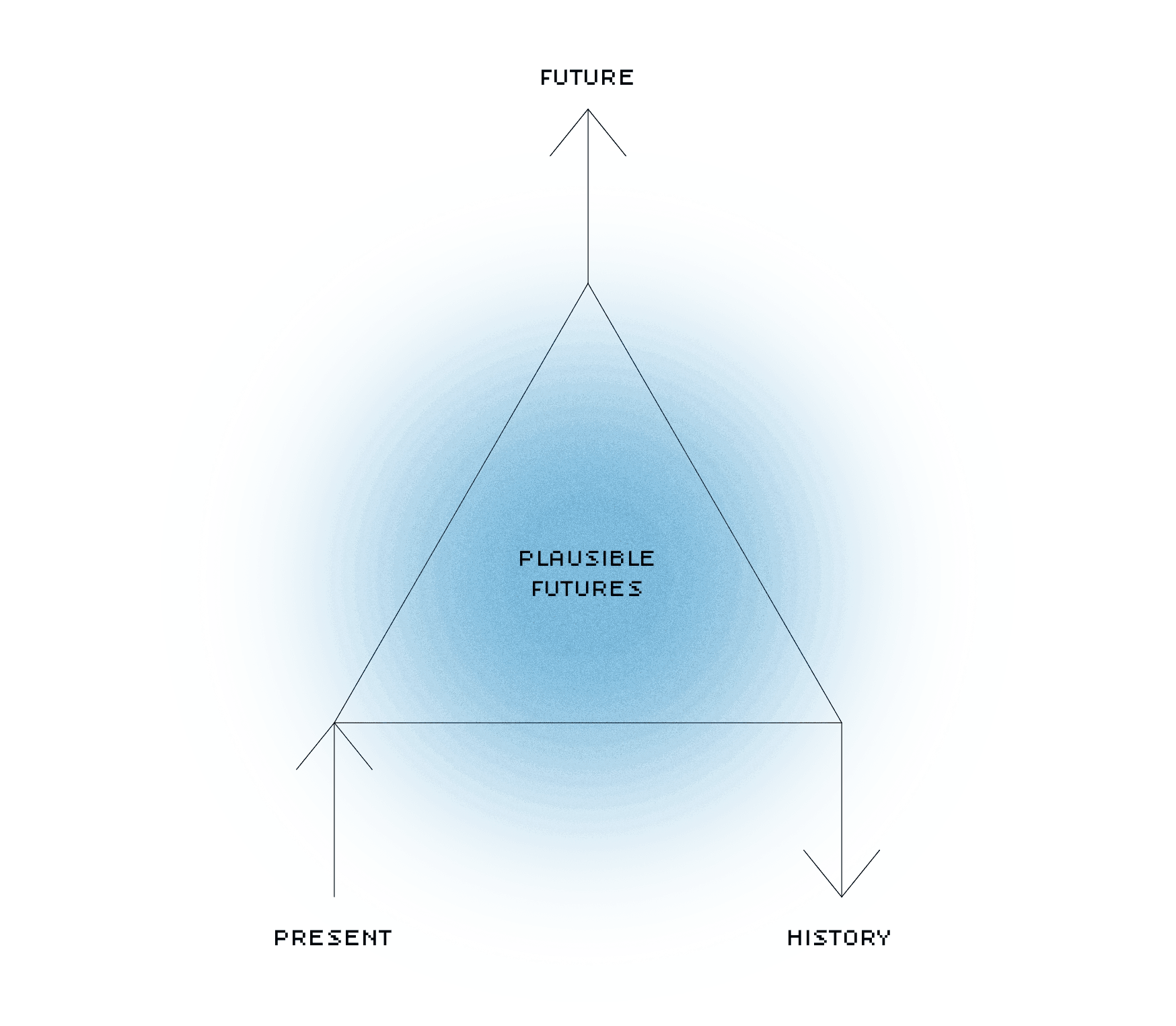
Effective strategic foresight requires transforming pattern analysis into coherent narratives explaining:
• pattern current state (how developed is it?)
• pattern trajectory (where is it heading?)
• pattern drivers (what’s causing it?)
• pattern implications (what might it affect?)
• pattern uncertainties (what could change its direction?)
These narratives develop into a complete story that explains how various signals connect into a unified theme, and becomes the foundation for scenario development and strategic option generation.
Strong trend narratives balance analytical rigour with compelling storytelling, as they’re grounded in evidence but need to be accessible to diverse stakeholders, inspiring strategic imagination while maintaining practical relevance. However, the narrative development process often reveals gaps in understanding, requiring additional research or analysis.
At the same time, initial patterns and narratives should be tested and refined through stakeholder engagement and expert input. Different stakeholders will have different perspectives based on their roles and interests, so they allow for testing the robustness of the environmental analysis. Strong patterns and trends should withstand scrutiny and incorporation of diverse viewpoints.
The ultimate goal of the SCAN & SPECULATE phase is creating strategic insights to inform better decisions about its future. These insights include current strategic foundation, awareness of environmental forces affecting the brand’s context, sensitivity to emerging signals of change, and recognition of patterns that suggest future developments. This phase transforms brands from passive recipient of change to active reader of emerging reality, developing what military strategists call ‘situational awareness’, which doesn’t guarantee strategic success, but it provides the foundation for adaptive, responsive, creative strategic action.
At the end of this phase, one should have:
• organised signal and trend clusters into meaningful thematic groups
• a comprehensive cross-impact analysis showing relationships between major patterns
• a trend lifecycle assessment for each major pattern
• coherent trend narratives explaining current state, trajectory, and implications
• validated insights from stakeholder and expert input
The information gathered here becomes the raw material to start from in the next phase of strategic foresight, ANCHOR, where gathered complexity will be synthesised into useful questions and scenarios.


‘The art of being wise is knowing what to overlook’ (William James, philosopher and psychologist).
INTRO
Researching and experimenting is truly fascinating. However, at some point, we need to choose what, among our research and experiemnts, actually matters to our brand. The ANCHOR phase selects which questions matter most to the project, transforming patterns and trends into scenarios, ‘what could be’.
While the previous phase required observation free of preconceptions, here judgement is needed to distinguish signal from noise, critical from peripheral. In general, this phase transforms gathered information into clear uncertainties that will impact the brand, and develop scenarios in preparation for them.
Here, we have to balance opposite competing demands: one must be selective without being narrow, create workflows robust enough to guide strategy but flexible enough to adapt as new information emerges, generate scenarios distinctive enough to provoke different strategic responses but plausible enough to be taken seriously.
STEP 5: CRITICAL UNCERTAINTIES IDENTIFICATION
The strategic significance of a factor, signal or trend emerges from the intersection of two dimensions: potential impact on the brand and uncertainty about future developments. Understanding this intersection reveals why certain factors deserve concentrated strategic attention whilst others can be safely monitored or ignored.
Let's consider factors with high certainty, regardless of their potential impact. Climate change is occurring and the trajectory is clear even if precise timing and magnitude are uncertain, digital technology will continue advancing and global population will reach specific predictions. These high-certainty factors certainly affect strategy, but their predictability allows to plan for them with confidence and anticipation, rather than developing multiple scenarios.
Factors with low impact on the brand might be highly uncertain but remain strategically peripheral. These include developments in industries far removed from the brand ones or regulatory changes affecting unrelated sectors. Although they might be interesting, they are not strategically consequential. Tracking everything removes attention from what matters.
The combination of high potential impact with high genuine uncertainty defines critical uncertainties. They are the factors that could fundamentally alter the strategic context but remain genuinely difficult to predict. Some examples include: consumer behaviour changes in response to major social shifts, pace and direction of technology adoption, economic recession timing and severity, regulatory approaches to emerging issues. These uncertainties shape radically different strategic contexts that demand different responses.

Critical uncertainties become the foundation for scenario planning and the brand’s success thus depends on navigating them effectively. One way of individuating critical uncertainties is to use the Impact/Uncertainty Matrix:
• Step 1: factor identification by listing all the trends, forces, and developments identified in earlier phases. To avoid overlooking important ones, one should try and organise factors into manageable categories.
• Step 2: impact assessment through evaluating potential impact on the brand using a 0-10 score for each factor. Questions that help:
- How would this factor affect customer needs or preferences?
- How might it influence competitive dynamics?
- Could it change our business model viability?
- Would it require new capabilities or partnerships?
• Step 3: uncertainty assessment by evaluating how predictable future developments are using a 0-10 score for each factor.
• Step 4: matrix plotting by creating a visual matrix and plotting each factor
• Step 5: quadrant analysis, focusing attention on factors in the top-right quadrant (High Impact, High Uncertainty)
• Step 6: selection of 2-4 critical uncertainties for scenario development
• Step 7: definitions for each critical uncertainty and extreme consequences
• Step 8: stakeholder validation confirming relevance and importance
STEP 6: SCENARIO DEVELOPMENT
Once the impact and uncertainty of a factor in regards to a brand has been assessed, we need to create the structural foundation for multiple plausible future scenarios using systematic methodology. Good scenarios provide a structured way to explore different futures and test strategic options.
There are many tools to generate scenarios that can be used alone or combined.
> 2×2 Matrix
The most practical and simplistic scenario framework uses two critical uncertainties as axes to create four distinct scenarios. To use the matrix:
• Step 1: selecting two genuinly independent (orthogonal) critical uncertainties that create meaningfully different strategic contexts. Selection questions:
- Which uncertainties most affect our strategic choices?
- Which create genuine strategic dilemmas?
- Which force us to consider fundamentally different brand positions or business models?
• Step 2: defining the axes, for each uncertainty, creating a spectrum or range rather than binary choice, in order to avoid false dichotomies. Axes create fundamentally different strategic environments that demand different responses, thus combinations that force genuine strategic rethinking.
The axes extremes should be defined clearly and specifically:
• Step 3: naming the four quadrants with clear and specific names that capture the essence of each scenario whilst avoiding value judgements.Vague uncertainty definitions produce vague scenarios: ‘Economic conditions’ is too broad and ill-defined. ‘Real GDP growth averaging 4%+ versus recession with negative growth’ provides clear, measurable endpoints.

> Morphological Analysis
Its purpose it to generate comprehensive alternatives by systematically exploring combinations of different variables affecting the business’ strategic context. This is particularely useful when 2×2 matrices feel too simple but overwhelming complexity wants to be avoided.

> The Four Archetypes
It provides structured alternative to uncertainty-based scenarios (like 2×2 matrices). Rather than asking ‘what if this variable goes high or low?’, archetypes ask ‘what if the future follows this fundamental pattern?’. They generate deeper narrative richness and prevent blind spots by ensuring you explore growth, constraint, transformation, and collapse possibilities simultaneously.

> Integrated Scenario Framework
When traditional scenario planning feels constraining, the Integrated Scenario Framework can create four scenario types based on different strategic purposes rather than critical uncertainties: preferred, disowned, integrated, outlier. It is less systematic than uncertainty-based approaches.
The following tools are examples that allow to better understand each generated scenario:
> A day in a life
This tool can be thought as the customer journey exercise but projected into the future, where a customer persona's typical day is mapped.
> Design Fiction
Its purpose is to transform abstract scenarios into tangible experiences by creating artefacts and prototypes from imagined futures, moving beyond written descriptions to create visceral understanding of scenario implications.
> The Futures Cone
Building on the Futures Cone framework, originated from Norman Henchey's 1978 taxonomy of futures (possible, plausible, probable, preferable), first graphically visualised by philosopher Charles Taylor in 1990, and then developed into the modern framework by futurists Trevor Hancock and Clement Bezold in 1994, we validate our scenario coverage across possible, plausible, probable, and preferable futures, ensuring comprehensive strategic foresight.
• Possible Futures (Outermost Cone)
Everything that might conceivably happen, regardless of likelihood. Limited only by physical laws and logical constraints.
Brand application: possible futures to stretch thinking beyond conventional assumptions. Ask ‘What’s the most extreme scenario that could still theoretically occur?’
• Plausible Futures (Second Cone)
Futures that could reasonably happen based on current knowledge and trends. These pass basic plausibility tests.
Brand application: most strategic foresight focuses on plausible futures. These form the basis for serious scenario planning and strategic preparation.
• Probable Futures (Third Cone)
Futures that current evidence suggests are likely to occur. Often based on trend extrapolation and statistical analysis.
Brand application: these futures warrant the most immediate strategic attention and resource allocation, as they’re most likely to affect the brand.
• Preferable Futures (Innermost Cone)
Futures we actively want to create or move towards. These represent aspirational goals and values-based choices.
Brand application: the brand vision and strategic objectives should align with preferable futures. Use these to guide strategic option selection.

To use the Futures cone, this is the process:
• Step 1: Future Mapping Exercise
Generating potential future developments relevant to the brand
Plotting each development on the Futures Cone based on its category
Identifying gaps where important categories are under-represented
Ensuring the scenario framework covers appropriate cone sections
• Step 2: Strategic Conversation Structure
Use the cone categories to structure strategic discussions:
- ‘What possible futures are we not considering?’
- ‘Which plausible futures deserve more attention?’
- ‘Are we over-investing in low-probability futures?’
- ‘How do our preferable futures align with probable ones?’
• Step 3: Scenario Portfolio Development
Creating scenarios that span different cone areas:
- 1-2 scenarios from probable futures (high likelihood focus)
- 1-2 scenarios from plausible but less probable futures (stretch thinking)
Considering implications of preferable futures not aligning with probable ones
Example of tools integration
If the 2x2 Matrix was used for scenario generation, then this can be integrated with the Futures Cone.
• Before the 2×2 matrix development, the cone can be used to brainstorm the full range of possibilities and ensure the critical uncertainties capture important plausible futures.
• After the 2×2 matrix development, one can map the four scenarios onto the Futures Cone to verify one has achieved appropriate balance between probable and plausible futures.
• Dynamic scenario management: as new information emerges, scenarios may move between cone categories. What seemed merely plausible might become probable, requiring strategic attention shifts.
Scenario Quality Assessment
With clear scenarios now in place, the next question becomes critical: what do these possible futures mean for our brand? Scenario testing reveals whether our current positioning remains viable, requires evolution, or demands fundamental transformation.
Good scenarios should meet the following criteria:
• Plausibility: could this realistically happen?
• Differentiation: is this meaningfully different from other scenarios?
• Relevance: does this address issues important to the brand?
• Memorability: can stakeholders easily remember and discuss this scenario?
Not only that, each scenario should have a brief description, should report logic and plausibility assessment, and stakeholders should validate them to confirm their relevance or not.
STEP 7: EVALUATING BRAND EVOLUTION
Once scenarios have been developed, their foresight-driven testing should inform whether current brand elements remain assets or liabilities. Testing scenarios from a brand analysis perspective means evaluating:
• How well does our current brand perform across different future scenarios?
• Which brand elements remain valuable versus which become liabilities?
• What new brand positioning would succeed across multiple scenarios?
In general, the critical strategic question here is: ‘does our brand need evolution, and if so, how significantly?’.
The gap between current brand reality and future aspirations, particularly when tested against emerging scenarios, reveals whether incremental refresh or fundamental transformation is required. Understanding this distinction prevents organisations from either changing too little, thus maintaining strategic inertia, or changing too much, destroying valuable brand equity unnecessarily.
Here, ‘brand refresh’ and ‘rebranding’ refer specifically to the evolution of core brand identity, namely values, vision, voice, and strategic positioning, rather than visual identity changes alone. This strategic focus ensures that brand evolution decisions are grounded in foresight insights and organisational capability, not based on aesthetics.
• Brand refresh indicators:
- Core brand promise remains relevant but needs modernisation
- Visual identity feels dated but brand associations are positive
- Market position is sound but communication needs updating
- Customer base is loyal but growth requires reaching adjacent segments
• Rebranding indicators:
- Fundamental business strategy shift requires new positioning
- Merger, acquisition, or major organisational change
- Severe reputational damage requiring fresh start
- Target audience has completely evolved beyond current brand relevance
- Competitive landscape has shifted dramatically
- Legal challenges necessitate name or identity changes
- International expansion requires cultural adaptation
If scenarios repeatedly highlight the obsolescence of a brand position, a refresh or rebrand conversation is fundamental.
Here’s a quote to remember: ‘branding, without strategy, is just decoration’. Although I was unable to trace the author back to it, many people in the industry live by it.
Ending the ANCHOR phase means having successfully transformed extensive environmental scanning and signal detection into structured frameworks that guide strategic decision-making. Strategic foresight moved from overwhelming complexity to manageable structure, and from scattered observations to organised strategic intelligence.
Scenarios are thus now complete. They represent distinct, plausible futures the brand might encounter.
They will remain abstract until connected to specific strategic implications, which will happen in the next step: KINDLE IDEAS. Here, we’ll will develop detailed scenarios narratives, explore their strategic implications, and generate diverse strategic options that position the brand for success across different futures.


‘The best way to predict the future is to invent it’ (Alan Kay, computer scientist, considered the father of personal computers, here in a picture with Steve Jobs).
INTRO
The KINDLE IDEAS phase is where strategic foresight transforms speculations and theories into strategic advantage. Once what might happen has been identified, now we’ll explore how to succeed regardless of which future emerges.
The phase name reflects this transition from analysis to imagination. ‘Kindle’ suggests igniting creative thinking, sparking strategic possibilities, and lighting the way toward action. ‘Ideas’ emphasises that this phase generates options rather than prescribing solutions, thus multiple pathways rather than single plans.
Here, we diverge our thinking once again to explore the many ways the brand could respond in each meaningful scenario.
STEP 8: DETAILED SCENARIO CONSTRUCTION
Scenarios enable brands to test strategies before committing resources, to experience failure and success in imagination rather than reality. Turning one from abstract or analystical to narrative ones allows for more stakeholder emotional involvement, thus improves the possibility of strategies to become concrete.
Narrative storytelling, like any effective fiction, creates believable worlds; here, however, it needs to also illuminate strategic choices by remaining grounded in plausible development pathways. In general, narrative scenarios are useful to answer the following question(s):
How will we ________________________ in the future?
How will we llllleat
How will we lllllshop
How will we lllllwork
How will we lllllstudy
How will we lllllsleep
How will we llllltravel
How will we lllllcommunicate
How will we lllllgovern
How will we lllllstay fit
How will we lllllmanufacture
How will we lllllholiday
How will we lllllmarry
How will we lllllraise a family
How will we lllllmanage people
How will we lllllentertain ourselves
Narrative Scenario Elements
> Setting the scene (what the world looks like)
• How has society, technology, economy, culture evolved?
• What does daily life feel like?
• What assumptions about normalcy have changed?
• How do cities, workplaces, homes, public spaces reflect this future’s values and capabilities?
• How do values and priorities transform?
• What becomes "normal" vs. what becomes "unthinkable"?
> Character development (how customers have evolved)
• What do they care about?
• How do they make decisions?
• What pressures and opportunities shape their lives?
• How have their needs, preferences, behaviours, and expectations changed?
• What new customer segments might have emerged, and what traditional segments might have disappeared or transformed beyond recognition?
> Plot dynamics (what events led to this future)
• Which changes enabled other changes?
• What tipping points accelerated transformation?
• Where did gradual evolution give way to sudden shifts?
> Market context (how the industry has evolved)
• Who are the new players, and what happened to established ones?
• What business models succeed and fail?
• How have customer relationships, value creation, competitive dynamics, and industry boundaries changed?
• What role do technology, regulation, social movements, and economic forces play in shaping market structure?
Narrative Scenario Development Process
• Phase 1: Historical Pathway
Creating a plausible timeline from today to the future scenario. This timeline shouldn’t be deterministic prophecy but plausible sequence of developments that could unfold under the scenario’s assumptions.
- What early signals might strengthen?
- Which trends might accelerate or decelerate?
- What unexpected events might catalyse change?
- How might different forces interact and reinforce each other?
• Phase 2: Present-Day Description
Describing what it’s like to live and work in this future, not as a historical summary but as a, perhaps emotional, experience. The A day in a Life tool can help.
- What would a typical day involve for different stakeholders?
- What challenges and opportunities do they face?
- What seems normal and what feels new?
- How do customers actually interact with brands in this future?
- What does the purchase experience involve?
- How do supply chains operate?
- What does competition feel like from the inside?
• Phase 3: Consumer and Market Dynamics
Focusing on elements that affect the brand strategy, paying attention to generational dynamics. Scenario conditions might affect customers’ lives, priorities, and relationships with brands.
- Economic conditions shape spending power and value consciousness.
- Technology changes interaction preferences and service expectations.
- Social movements influence values and purchase criteria.
- Regulatory changes affect privacy expectations and trust requirements.
- Environmental conditions influence lifestyle choices and sustainability priorities.
One should have a number of narrative and detailed scenarios equivalent to the number of scenarios ultimately selected in the ANCHOR phase. Each scenario should have quality assurance validation confirming plausibility and relevance.
Narrative Scenario Quality Assessment
Each scenario should be tested for plausibility by constructing credible causal chains from present conditions to scenario futures. If scenarios feel too similar, they won’t generate sufficient strategic variety, and if they don’t affect practical strategic thinking, they need more focused development.
• Can one explain how current trends and forces might evolve into scenario conditions?
• Do the pathways require reasonable rather than miraculous developments?
• Would knowledgeable observers consider these scenarios possible even if unlikely?
• Do they suggest different customer needs, competitive dynamics, or success factors?
• Would the brand need different capabilities or strategies to succeed in each scenario?
• Do scenarios illuminate real choices about positioning, capabilities, partnerships, or resource allocation?
• Do they reveal opportunities or threats one hadn’t considered?
• Do stakeholders remember the scenarios?
Scenarios that are too complex or abstract won’t actually influence strategic decisions, so effective scenarios become part of organisational vocabulary, often referenced and evoking rich strategic contexts every time.
STEP 9: STRATEGIC IMPLICATONS ANALYSIS
Each scenario should be systematically assessed in realtion to the brand strategy, positioning, and capabilities. In particular, what should be evaluated are implications accross scenarios:
• Brand positioning and value proposition
- Do customer priorities shift in ways that strengthen or weaken the brand’s current positioning?
- What new value propositions might become important?
- How might competitive differentiation requirements change?
- What positioning strategies might work across multiple scenarios versus which might be scenario-specific?
• Customer relationships and experience
- Do customers expect more or less personalisation?
- How do communication preferences evolve?
- What service delivery models become standard?
- How do privacy expectations, trust requirements, and engagement preferences shift?
- What relationship models create competitive advantage under different conditions?
• Competitive positioning and differentiation
- Who are the main competitors in each scenario, and how do their strengths and weaknesses change?
- What capabilities become competitively critical?
- How do competitive boundaries and industry definitions evolve?
- What forms of differentiation become more or less sustainable?
• Business model and revenue streams
- What revenue models work best under different conditions?
- How do cost structures and margin requirements evolve?
- What role do partnerships, platforms, or ecosystems play?
- How might technology enable new business model possibilities?
• Operational capabilities and resources
- What new capabilities might become essential?
- Which current strengths become more or less valuable?
- What resource allocation priorities might change?
- How do talent requirements, technology needs, and partnership strategies evolve?
SWOT Analysis by Scenario
For each scenario, focused SWOT analysis should be conducted. The alysis identifies which current assets become more valuable and which might become liabilities, enabling more nuanced strategic option development.
For each scenario, one should assess which current brand strengths become more valuable under those conditions, such as:
• Capabilities that seem moderately important today might become competitively critical in certain futures.
• Brand assets that provide marginal advantage currently might become enormous differentiators under changed conditions.
At the same time, one should examine which current limitations become more problematic under different scenario conditions, such as:
• Weaknesses that are manageable today might become fatal under certain futures.
• Capability gaps that seem addressable currently might become unbridgeable under changed conditions.
• Recognising these amplified weaknesses helps prioritise capability development and risk mitigation strategies.
SWOT Analysis:
• Strengths: Which current brand strengths become more valuable?
• Weaknesses: Which limitations become more problematic?
• Opportunities: What new market opportunities emerge?
• Threats: What new competitive threats might emerge?
The SWOT analysis is useful to identify opportunities, which may be scenario-specific or emerge across multiple futures.
Understanding opportunity patterns helps identify robust versus contingent strategic possibilities. Example of new market opportunities that emerge under each scenario’s conditions:
• New customer segments
• Addressing evolved needs
• Leveraging new technologies
• Exploiting changed competitive dynamics
Recognising new competitive threats helps identify defensive strategic priorities and early warning indicators. Examples of threats that might emerge under different conditions:
• New entrants from adjacent industries
• Disruptive technologies that eliminate current advantages
• Regulatory changes that favour competitors, or social shifts that undermine the value proposition
Cross Scenario Pattern Analysis
While individual scenario analysis generates specific insights, cross-scenario pattern analysis reveals strategic opportunities and requirements that span multiple futures. Strategic approaches that work well across multiple scenarios become candidates for ‘no-regret moves’ that strengthen the brand under any conditions. One should identify capability requirements that appear across multiple scenarios even if their specific manifestation varies.
Perhaps all scenarios require enhanced digital capabilities, superior customer experience, or sustainable operational practices. Identifying these consistent requirements helps prioritise resource allocation toward universally valuable capabilities.
All scenarios might require data analytics capabilities, but some emphasise customer insight whilst others focus on operational efficiency.
This analysis informs portfolio approaches that balance robust foundations with scenario-specific options. At the same time, some competitive advantages might be sustainable under any conditions whilst others depend on specific market structures or customer preferences, so understanding these patterns helps identify which strategic investments provide enduring value and which create only temporary advantage.
Casual Layered Scenario Analysis
CLA is essential for understanding the depth of transformation each scenario represents. CLA adds a layer-by-layer analysis that reveals:
• Litany (headline level): What’s the observable change?
• Social Causes (systematic level): What structures/systems drive this? What assumptions about human nature/society shift?
• Worldview/Discourse (epistemological level): What beliefs/values underpin it? How do different scenarios reflect fundamentally different worldviews?
• Myth/Metaphor (deepest level): What fundamental human narratives are being rewritten?

Why Scenario Analysis
Scenario analysis is crucial to create a ‘strategic requirement map’ that specifies, under different scenarios:
• What the organisation might need to be excellent at
• What brand positions might be attractive
• What economic models might succeed
These requirements maps become the foundation for strategic option generation, clarifying what the brand is trying to achieve before focusing on how to achieve it.
STEP 10: STRATEGIC OPTIONS GENERATIONS
The ultimate purpose of strategic foresight is developing better strategies to prepare brand success accross multiple futures, while building adaptive capacity for unexpected developments.
As always, there are many ways in which one can can generate strategies.
> Strategic Options Portfolio
Under genuine uncertainty, no single strategy succeeds across all possible futures, so the portfolio approach spreads bets across, building resilience whilst maintaining upside potential.
There are different types of strategic responses within strategic portfolios.
Like financial portfolios balance risk and return across different asset classes, strategic portfolios balance certainty and uncertainty across different types of initiatives:
• No-Regret Moves
- Strategies that create value regardless of which scenario occurs:
- Capability investments that strengthen the brand across all futures
- Market positions that remain valuable in any scenario
- Operational improvements that enhance performance universally
• Real Options
- Investments that provide flexibility and future choices:
- Pilot programmes that can be scaled if conditions are favourable
- Partnership agreements that can be activated when needed
- Technology platforms that enable multiple future applications
• Big Bets
- High-risk, high-reward strategies for specific scenarios:
- Major investments that pay off substantially if certain futures emerge
- Transformational changes that position the brand for specific conditions
- Bold strategic moves that could create first-mover advantages
• Contingent Strategies
- Responses triggered by specific conditions, enabling rapid pivots when conditions change:
- Pre-developed crisis response protocols
- Prepared partnership agreements activatable if needed
- Alternative supply chain pathways available if primary disrupted
In order to create a balanced portfolio of strategic options, one has to mix no-regret moves, real options, and big bets:
• Balance between defensive and offensive strategies
• Alignment with resource constraints and capabilities
• Consideration of timing and sequencing
Options Generation
Strategic option development works best when it combines creative brainstorming with systematic analysis. The combination produces options that are both imaginative and actionable.
For each scenario, one should brainstorm potential strategic responses:
• How could the brand succeed in this specific future?
• What would differentiate it from competitors?
• What new capabilities or partnerships would be needed?
• What business model innovations might be appropriate?
Cross-Scenario Testing
Evaluating how each option might perform across different scenarios:
• Which options work well across multiple scenarios, suggesting robust strategic value?
• Which options are scenario-specific but could create substantial advantage if their target conditions emerge?
• Which options provide valuable learning regardless of outcome, building capabilities that enhance future adaptability?
Strategic Options Stress Testing
One example approach to wild card preparation involves testing strategic options against extreme conditions to understand their resilience and identify potential vulnerabilities. This stress-testing reveals which strategies remain viable under disruption and which require contingency planning.
• How would the option perform during economic crisis, regulatory upheaval, technological disruption, social unrest, or natural disasters?
• What would constitute the minimum viable response to major disruption?
• Which options provide maximum flexibility during crisis conditions?
Antifragility emerges from recognising that wild cards are inevitable features of complex environments rather than unfortunate exceptions to normal conditions. Organisations that build wild card preparation into routine strategic thinking rather than treating it as separate crisis planning develop the mindset and capabilities that enable thriving amid uncertainty.

> Three Horizons Strategic Planning
Organising strategic options across different time horizons:
• Horizon 1 (0-2 years): Core Business Optimisation
- Immediate improvements to current operations
- Customer experience enhancements
- Efficiency and quality initiatives
- Market share protection strategies
• Horizon 2 (2-5 years): Adjacent Opportunities
- New market segments or geographic expansion
- Product or service line extensions
- Strategic partnerships and alliances
- Emerging technology adoption
• Horizon 3 (5+ years): Transformational Innovations
- New business models or value propositions
- Disruptive technology development
- Fundamental market repositioning
- Industry ecosystem transformation
> Pre-Mortem Analysis of Strategic Options
In pre-mortem, strategies failed and are traced back to prevented failure, asking ‘what could go catastrophically wrong?’. It’s essential for identifying:
- Hidden assumptions and unconsidered failure modes
- Organisational blind spots
- Implementation pitfalls before they happen
STEP 11: WILD CARDS & DISCONTINUITY PLANNING
Discontinuity planning allows to prepare for low-probability, high-impact events that could fundamentally disrupt planned strategies in a very short period of time.
Even the best scenario planning can’t anticipate every possibility, so wild card preparation builds resilience and response capability. There are different types of wild cards:
> Black Swans
Events that are genuinely unpredictable developments with massive impact. They’re outliers that exceed normal expectation boundaries and carry extreme consequences:
• Natural disasters or pandemics
• Geopolitical shocks or conflicts
• Technological breakthroughs or failures
• Financial system collapses
> Grey Rhynos
Highly probable, high-impact developments that are widely ignored despite their visibility:
• Climate change impacts
• Demographic transitions
• Infrastructure decay
• Social inequality tensions
> Black Elephants
Probable events in denial. They’re more predictable than Black Swans but receive less attention than their probability warrants because their implications seem too disruptive to acknowledge:
• Automation displacement
• Resource depletion
• Regulatory backlash
• Generational value shifts
> Dragon Kings
Predictable extreme events in complex systems
• Market crashes
• Supply chain failures
• Reputation cascades
Additional questions for wild cards:
• What wild cards could accelerate/derail each scenario?
• What wild cards could cause scenario shifts (S1 > S2)?
• What contingencies enable rapid response?
• War-gaming wild card responses?
Wild Card Preparation Strategies
Whilst specific wild cards cannot be predicted, many exhibit warning signals that suggest increased probability or accelerating development. Early warning systems create organisational sensitivity to these signals without requiring prediction of specific outcomes.
• Tracking leading indicators and weak signals
- Accelerating research activity around specific topics
- Increasing media attention to particular issues
- Growing social media discussion of certain themes
- Rising expert concern about specific risks
• Monitor expert warnings and research
- Patent filings
- Research publications
- Regulatory activities
- Social media conversations
- Market behaviours for anomalous developments
• Watching for accelerating patterns
• Setting up automated alerts for key topics
• Establish expert network relationships that provide early insight into developments within different domains.
Rapid Response Protocols
Beyond predicting or preparing for specific wild cards, organisations can develop general capabilities that enable effective response to unexpected developments regardless of their specific nature. These capabilities create strategic insurance against the inherent unpredictability of complex environments.
• Decision-making processes for crisis conditions
- Pre-authorised resource allocation mechanisms
- Streamlined approval processes
- Emergency decision criteria
- Crisis leadership protocols
• Resource reallocation mechanisms
- Flexible budgeting systems
- Modular organisational designs
- Cross-functional capability pools
- Emergency fund reserves
• Communication plans for stakeholders
- Stakeholder priority matrices
- Crisis communication protocols
- Transparent reporting systems
- Community engagement processes
• Partnership activation procedures
- Mutual aid agreements
- Resource sharing protocols
- Emergency partnership frameworks
- Community response networks
Building Adaptive Capabilities
Beyond specific strategic options, scenario analysis often reveals requirements for adaptive capabilities that enable response to unexpected developments or changing conditions. These meta-capabilities don’t solve specific strategic challenges but enable a broarder organisational capacity to address challenges as they emerge.
• Environmental sensing capabilities
Enable early detection of scenario shifts or unexpected developments. The goal is maintaining awareness of emerging conditions that might require strategic response.
- Signal detection systems
- Trend monitoring processes
- Stakeholder feedback mechanisms
- Competitive intelligence capabilities
• Strategic flexibility capabilities
Enable rapid strategy adjustment without organisational trauma. The goal is maintaining the capacity to adapt when circumstances genuinely warrant strategic shifts.
- Modular business model designs
- Flexible resource allocation systems
- Rapid decision-making processes
- Experimental learning capabilities
• Learning and experimentation capabilities
Enable testing strategic approaches before full commitment whilst building knowledge that improves future strategy development. The goal is reducing unnecessary risk through systematic learning.
- Pilot programme capabilities
- Partnership exploration processes
- Technology experimentation systems
- Market entry testing approaches
These adaptive capabilities represent investments in strategic intelligence and organisational flexibility that pay dividends across multiple futures.
As one completes the KINDLE IDEAS phase, they will have transformed scenario into strategic possibilities, and abstract futures into concrete preparation.
This comprehensive strategic arsenal positions the brand to succeed regardless of which future emerges. The organisation has thus developed the strategic imagination and preparation discipline that enables continuous adaptation as the future actually unfolds.
The specific strategies one has developed may prove useless when circumstances inevitably differ from scenario expectations, but the strategic thinking capabilities, adaptive systems, and preparation mindset one has built will prove indispensable for navigating whatever future actually emerges.
What was produced during this phase lays the foundation for the final phase of strategic foresight, UNIFY & UTILISE, where the brand will transform strategic possibilities into strategy planning, establishing monitoring systems and building ongoing capabilities that ensure strategic foresight investment creates lasting competitive advantage.


‘It is not the strongest that survives, nor the most intelligent, but the most adaptable to change’ (often attributed to Charles Darwin naturalist, geologist, and biologist whose scientific theory of evolution by natural selection became the foundation of modern evolutionary studies).
INTRO
The specific strategies one develops today may indeed prove useless when the future actually arrives, yet the process of strategic foresight, meaning the discipline of thinking through multiple futures and developing diverse responses, creates the capability and mindset that enables adaptation when plans inevitably meet reality.
At this point of the strategic foresight project, notebooks or sheets of paper should be filled with insights, whiteboards or Miro boards should display trend clusters translated into less chaotic scenarios, and the team should have in hand multiple strategic possibilities.
And yet, nothing has actually changed within the organisation.
The future remains as uncertain as ever, and the brand faces the same challenges that prompted this foresight journey.
Therefore, this is the moment in which strategic foresight either proves its worth or reveals its limitations. The UNIFY & UTILISE phase exists precisely to bridge this gap between what is and what we want it to be. It’ll be the most technical phase out of all previous ones, and the one with most data tables.
STEP 12: STRATEGIC PLANNING & ROADMAPPING
We first need to create integrated strategic approaches that perform well across multiple scenarios whilst maintaining clear direction and priorities. In general, we need to convert scenario insights and strategic options into concrete implementation plans with clear timelines and milestones, to inform concrete strategic choices about resource allocation, capability development, market positioning, and organisational priorities.
Cross-Scenario Synthesis
What we will do, then, is synthesise insights from all scenarios into a unified strategic approach. The synthesis process often reveals strategic approaches that seemed scenario-specific but actually create value across multiple futures through different mechanisms, preventing premature dismissal of options that initially seem narrow but actually offer broader strategic value.
At the same time, cross-scenario analysis reveals hidden vulnerabilities and prevents strategic commitment to approaches that depend on specific conditions continuing.
• Identifying strategies that work across multiple scenarios
• Determining scenario-specific contingencies
• Balancing risk and opportunity across different futures
• Creating decision trees for strategic choices
• Priority Setting
- Focusing on no-regret moves with immediate implementation
- Sequencing real options based on learning value and timing
- Planning big bets with appropriate risk management
- Aligning initiatives with resource constraints
Backcasting Methodology
Backcasting inverts typical processes by beginning with desired future outcomes and working backward to identify necessary pathways, enabling more creative and comprehensive approaches to strategic development.
> Step 1: Starting with the aspirational brand vision declared during the SCAN & SPECULATEphase, and enriched by scenario insights and strategic option development:
• What does success look like in 10-20 years?
• How has the brand evolved to remain relevant?
• What capabilities and relationships define its future state?
• What legacy does it want to create?
This future state definition should be ambitious enough to inspire and guide strategic investment whilst remaining achievable across different scenario conditions. It shouldn’t depend on specific external developments and should represent outcomes strategic foresight can influence through strategic choice and organisational capability.
> Step 2: Working backward from this future vision, one has to identify critical waypoints that mark progress toward the brand’s aspirational outcomes.
• What must be true 5 years before the brand vision is realised?
• What foundations need to be in place 3 years out?
• What initiatives must begin in the next 18 months?
• What actions are required in the next 6 months?
> Step 3: Pathway planning by connecting the present to the future, through logical sequences:
• What dependencies exist between different initiatives?
• How do early actions enable later developments?
• Where are the critical decision points and branch paths?
• What external factors could accelerate or delay progress?
The backcasting process often surfaces gaps between current strategic direction and future aspirations, revealing initiatives that seemed optional actually represent essential foundations for desired outcomes.
Resource Allocation Framework
The most effective allocation frameworks balance resources across different strategic purposes rather than simply prioritising individual initiatives.
• Core business activities
- 40-60% of resources
- Operational excellence
- Customer experience enhancement
- Market share protection
- Quality improvements
They maintain current competitive position and generate resources for future strategic investments
• Adjacent growth opportunities
- 20-30% of resources
- New market development
- Product extensions
- Strategic partnerships
- Capability building
They explore expansion possibilities while building capabilities that might prove valuable under different scenario conditions
• Transformational innovation
- 10-20%
- Disruptive technology development
- Business model experimentation
- Ecosystem transformation initiatives
- Long-term option creation
They prepare for scenarios that require fundamental strategic repositioning whilst building capabilities that could create breakthrough competitive advantages.
• Wild card preparation
- 5-10%
- Early warning system development
- Crisis response capability building
- Strategic flexibility reserves
- Contingency planning
They create insurance against scenario planning limitations whilst building adaptive capacity for unexpected developments
Decision-Making Frameworks for Uncertainty
Strategic implementation under uncertainty requires decision-making frameworks that guide choices when specific developments remain unclear.
Decision trees map different strategic pathways based on scenario developments, creating clear guidance for strategic choices as uncertainty resolves. They enable rapid strategic response without requiring prediction of specific outcomes.
The decision frameworks should specify trigger points that indicate when strategic adaptation becomes necessary, measurement systems that track relevant environmental changes, and response protocols that guide organisational action when triggers are activated.
Brand Evolution Evaluation
Once all strategic options have been defined and inserted in the roadmap, it’s now time to evaluate if the brand needs to refresh or completely rebrand its identity.
Here, ‘brand refresh’ and ‘rebranding’ refer specifically to the evolution of core brand identity, namely values, vision, voice, and strategic positioning, rather than visual identity changes alone. This strategic focus ensures that brand evolution decisions are grounded in foresight insights and organisational capability, not based on aesthetics.
• Brand refresh indicators:
- Core brand promise remains relevant but needs modernisation
- Visual identity feels dated but brand associations are positive
- Market position is sound but communication needs updating
- Customer base is loyal but growth requires reaching adjacent segments
• Rebranding indicators:
- Fundamental business strategy shift requires new positioning
- Merger, acquisition, or major organisational change
- Severe reputational damage requiring fresh start
- Target audience has completely evolved beyond current brand relevance
- Competitive landscape has shifted dramatically
- Legal challenges necessitate name or identity changes
- International expansion requires cultural adaptation
If scenarios repeatedly highlight the obsolescence of a brand position, a refresh or rebrand conversation is fundamental.
Here’s a quote to remember: ‘branding, without strategy, is just decoration’. Although I was unable to trace the author back to it, many people in the industry live by it.
STEP 13: ORGANISATIONAL CAPABILITY BUILDING
The most consistent predictor of sustained foresight success and, therefore relevance of the brand, is structural integration.
Capability building involves creating organisational infrastructure that supports ongoing environmental monitoring, decision-making processes that incorporate scenario thinking, and cultural norms that reward long-term thinking and strategic experimentation. Most importantly, it requires developing collective capabilities that enable organisational learning and adaptation as environments change and scenarios evolve.
One should remember that strategic foresight isn’t a one-time exercise but an ongoing organisational capability, so here we’ll build the muscles needed for continuous adaptation.
Organisational capability building
> Step 1: Current Foresight Capability Assessment
• Environmental Awareness
- How well does the organisation monitor external changes?
- What information sources are regularly consulted?
- How quickly are emerging trends identified and shared?
- Who takes responsibility for environmental intelligence?
• Strategic Thinking
- How comfortable is leadership with uncertainty and ambiguity?
- What processes exist for strategic option development?
- How are strategic decisions made and reviewed?
- What role do scenarios play in current planning?
• Adaptive Capacity
- How quickly can the organisation respond to changing conditions?
- What flexibility exists in resource allocation and deployment?
- How well do different parts of the organisation coordinate during change?
- What learning and improvement mechanisms are in place?
> Step 2: Building Foresight Infrastructure (Environmental Intelligence)
The key lies not in monitoring everything but in creating systematic coverage that matches the strategic needs whilst remaining manageable for consistent execution. Different organisational functions might take responsibility for different environmental domains, sharing insights through regular briefings and strategic discussions.
• Information Sources
- Industry publications and research reports
- Academic journals and research institutions
- Government agencies and policy organisations
- Think tanks and consulting firms
- Start-up ecosystems and venture capital
- Social media and online communities
• Scanning Process
- Weekly individual scanning responsibilities
- Monthly team signal-sharing sessions
- Quarterly deep-dive research projects
- Annual comprehensive environmental review
• Signal Management
- Consistent signal capture and documentation
- Regular signal evaluation and updating
- Pattern recognition and trend development
- Integration with strategic planning processes
• Cross-Functional Foresight Team
- Team Composition
- Representatives from different business functions
- Mix of analytical and creative thinking styles
- Combination of industry veterans and fresh perspectives
- External advisors and expert consultants
• Team Responsibilities
- Quarterly scenario review and updating
- Annual strategic options assessment
- Ongoing wild card monitoring
- Integration of foresight insights into business planning
> Step 3: Organisational Foresight Skills Development
Strategic foresight capability requires both individual skills and collective competencies that enable systematic environmental monitoring, creative strategic thinking, and effective strategic adaptation. Training and development programmes should address technical capabilities, analytical skills, and leadership competencies that support ongoing strategic foresight.
• Leadership Development
- Strategic thinking under uncertainty
- Scenario-based decision making
- Change leadership and communication
- Long-term vision development
• Analytical Skills
- Environmental scanning techniques
- Signal detection and evaluation
- Pattern recognition and analysis
- Strategic option development
• Creative Thinking
- Scenario construction and storytelling
- Alternative thinking and perspective-taking
- Innovation and ideation methods
- Systems thinking and complexity management
STEP 14: IMPLEMENTATION & MONITORING
The value of strategic foresight emerges from superior responsiveness to environmental changes and unexpected developments. This requires monitoring systems that track relevant changes, decision-making processes that enable rapid strategic adaptation, and learning systems that improve strategic thinking over time.
Therefore, implementation should always be accompanied by monitoring in order not to have blind execution.
Strategic Initiative Implementation with Adaptation
Instead of penalising strategic changes, success rewards appropriate responsiveness to changing conditions
• Initiative Planning
- Clear objectives and success criteria, maintaining flexibility about specific methods and intermediate outcomes.
- Resource allocation and timeline development
- Risk assessment and mitigation planning
- Stakeholder engagement and communication
• Progress Tracking
- Regular milestone reviews and updates
- Performance measurement against targets
- Issue identification and resolution
- Resource adjustment and reallocation
• Learning Integration
- Capturing insights and lessons from implementation
- Sharing learning across different initiatives
- Adjusting approaches based on experience
- Feeding insights back into strategic planning
Environmental Intelligence
The dashboard approach transforms environmental monitoring from periodic activity into systematic capability that maintains strategic awareness and enables responsive strategic adaptation.
• Key Indicators
- Scenario-relevant metrics and trends
- Wild card warning signals
- Competitive intelligence updates
- Stakeholder sentiment monitoring
• Monitoring Frequency
- Daily scanning of critical information sources
- Weekly dashboard updates and reviews
- Monthly trend analysis and assessment
- Quarterly strategic implications evaluation
• Alert Systems
- Automated alerts for significant developments
- Escalation procedures for critical changes
- Response protocols for different alert levels
- Communication processes for stakeholder updates
Strategy Review and Adjustment Process
They should generate clear strategic guidance whilst acknowledging uncertainty and preserving strategic flexibility.
• Monthly Operational Reviews
- Initiative progress and performance
- Resource allocation and constraints
- Tactical adjustments and optimisations
- Short-term opportunity identification
• Quarterly Strategic Reviews
- Environmental change assessment
- Scenario probability and implication updates
- Strategic option performance evaluation
- Medium-term strategy adjustments
•Annual Strategic Planning
- Comprehensive environmental scanning update
- Complete scenario review and refresh
- Strategic option portfolio reassessment
- Long-term vision and strategy evolution
STEP 15: LEARNING & ADAPTATION
Continuous learning and adaptation allows for strategic foresight success. This step institutionalises improvement, and requires systematic approaches to learning capture, capability development, and cultural evolution that embed strategic foresight into organisational identity.
Building continuous improvement systems is a topic that has also been extensively covered at the beginning of this page.
Learning Capture Systems
Effective strategic learning means improving strategic intelligence management, creating organisational memory for foresight insights. The knowledge management approach should balance systematic documentation with practical accessibility, comprehensive capture with focused relevance, and individual contribution with collective benefit.
• Knowledge Documentation
- Scenario development rationale and assumptions
- Strategic option evaluation and selection criteria
- Implementation experience and outcomes
- Environmental change patterns and implications
• Insight Sharing
- Regular presentations to leadership and stakeholders
- Cross-functional learning sessions and workshops
- External speaking and thought leadership opportunities
- Academic and industry research collaboration
• Knowledge Architecture
- Centralised repository for foresight materials
- Searchable database of signals and trends
- Historical record of strategic decisions and rationales
- Templates and tools for ongoing foresight work
Continuous Improvement Process
Regularly evaluating and improving foresight capability:
• Process Evaluation
- Assessment of foresight methodology effectiveness
- Identification of process improvements and optimisations
- Benchmarking against external best practices
- Integration of new tools and techniques
• Outcome Assessment
- Measurement of strategic decision quality
- Evaluation of strategic initiative success rates
- Assessment of organisational adaptation speed
- Comparison of performance against foresight insights
• Capability Development
- Individual skill development and training
- Team effectiveness and collaboration improvement
- External network and relationship building
- Technology and tool enhancement
Communities of Practice
Strategic foresight capability develops most effectively through communities of practice, combining formal training, peer learning, individual and collecive skill development, and internal knowledge sharing with external network.
> Internal Networks
• Foresight Champions
- Individuals with deep foresight skills and enthusiasm
- Regular meetings for skill sharing and development
- Mentorship relationships and capability building
- Innovation in foresight methods and applications
• Strategic Thinkers
- Broader network of strategy-minded individuals
- Cross-functional perspective sharing
- Strategic challenge discussion and problem-solving
- Future scenario gaming and simulation
> External Networks (connect with broader foresight community)
• Industry Networks
- Participation in industry foresight initiatives
- Collaboration with competitors on common challenges
- Sharing of non-competitive insights and methods
- Joint scenario development for industry issues
• Academic Partnerships
- Collaboration with research institutions
- Student project sponsorship and mentorship
- Faculty consulting and advisory relationships
- Research publication and knowledge contribution
Institutional Integration
It requires embedding future-oriented thinking into systems, cultural norms, and operational processes, instead of treating it as separate planning activity.
Process integration ensures foresight input to all major strategic decisions, making strategic foresight a core organisational competency.
• Governance Integration
- Board oversight of strategic foresight activities
- Executive team accountability for foresight capability
- Integration with existing planning and review processes
- Performance measurement and incentive alignment
• Cultural Development
- Celebration of foresight thinking and long-term orientation
- Tolerance for uncertainty and strategic experimentation
- Curiosity and learning orientation development
- External awareness and environmental sensitivity
• Process Integration
- Foresight input to all major strategic decisions
- Scenario consideration in investment and resource allocation
- Environmental scanning in operational planning
- Future orientation in performance measurement
Completing the UNIFY & UTILISE phase, strategic foresight has become strategic capability that influences how the organisation thinks, decides, and adapts.
The future remains uncertain, but the organisation now possesses the strategic thinking and adaptive capability to transform uncertainty into competitive advantage, environmental challenges into strategic opportunities, and changing conditions into sustainable success.
Hopefully, by the end of this process, strategic foresight will remain a fascinating and useful practice for brands, from corner-shops to colossuses, incorporated in their everyday work.